
Introduction
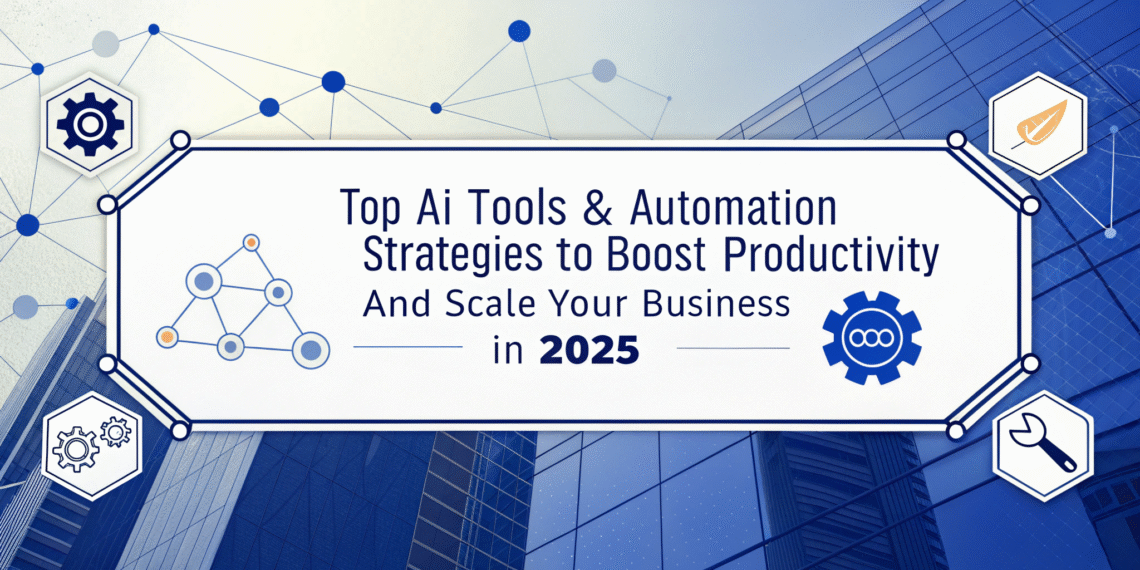
Artificial Intelligence (AI) and automation have become essential tools for businesses that want to stay competitive in 2025. From marketing and sales to customer service and operations, AI can streamline workflows, reduce manual effort, and provide actionable insights that drive growth. Businesses of all sizes are leveraging AI to save time, improve accuracy, and deliver personalized experiences at scale.
In this guide, we’ll explore the best AI tools and automation strategies you can use in 2025 to increase productivity, optimize operations, and dominate your industry. Whether you’re a marketer, entrepreneur, or manager, these actionable strategies will help you implement AI effectively and maximize your ROI.
Why AI Tools and Automation Are Essential in 2025
AI and automation are transforming business processes by enabling:
Faster Decision-Making: AI analyzes massive datasets to uncover trends and insights
Increased Efficiency: Automation handles repetitive tasks, freeing up human resources
Personalization: AI delivers tailored recommendations and experiences
Scalability: Businesses can handle more clients and data without increasing staff
Cost Reduction: Reduces human error and optimizes resource allocation
Companies that adopt AI early gain a competitive advantage by being faster, smarter, and more efficient.
AI Tools for Marketing and Content Creation
1. AI-Powered Content Writing Tools
ChatGPT, Jasper.ai, Copy.ai: Generate blog posts, social media content, emails, and ad copy instantly
Benefits: Save time, maintain consistent quality, and scale content production
Pro Tip: Use AI to draft content, then refine with your personal style to maintain authenticity
2. AI Design and Visual Tools
Canva AI, Adobe Firefly: Create social media graphics, presentations, and video content
Benefits: Non-designers can produce professional visuals quickly
Strategy: Repurpose visuals across platforms to increase reach
3. Video and Audio AI Tools
Synthesia, Pictory, Descript: Automate video creation and editing
Use Case: Transform blog posts into engaging videos for YouTube or social media
Benefit: Reach a wider audience without hiring a production team
AI Tools for Automation and Workflow
1. Zapier & Make (Integromat)
Connect multiple apps to automate repetitive workflows
Example: Automatically add leads from a web form to your CRM and send a welcome email
Benefit: Reduces manual tasks, saving hours per week
2. AI-Powered CRMs
HubSpot, Salesforce Einstein, ActiveCampaign: Automate lead scoring, segmentation, and follow-ups
Use AI predictions to focus on high-value leads
Helps improve conversion rates and sales efficiency
3. Smart Scheduling and Task Management
Clockwise, Motion, x.ai: Automate meeting scheduling and optimize calendar management
AI prioritizes tasks and time blocks for maximum productivity
AI for Analytics and Data-Driven Decisions
1. Predictive Analytics Tools
Google Analytics 4, PaveAI, Tableau: Forecast trends, user behavior, and sales opportunities
Use AI insights to make better marketing, product, and operational decisions
2. Automated Reporting
Generate dashboards and automated reports for stakeholders
Benefit: Save time and ensure data accuracy, reducing manual reporting errors
AI in Customer Experience
1. Chatbots and Conversational AI
Intercom, Drift, ChatGPT Chatbots: Provide 24/7 customer support
Automate FAQs, lead qualification, and appointment booking
Reduces response time and enhances customer satisfaction
2. Personalized Recommendations
AI analyzes user behavior to suggest products or services
Example: E-commerce sites recommending items based on browsing history
Drives engagement, conversions, and repeat purchases
AI Tools for Productivity and Collaboration
1. AI-Powered Writing Assistants
Grammarly, Wordtune: Enhance clarity, grammar, and tone in professional communication
Useful for emails, reports, and content creation
2. Meeting Summaries and Transcriptions
Otter.ai, Fireflies.ai: Automatically transcribe meetings and summarize key points
Saves time and ensures no critical information is missed
3. Project Management with AI Insights
Tools like ClickUp and Monday.com use AI to predict project timelines and resource allocation
Optimize workflows and reduce bottlenecks
Best Practices for Implementing AI and Automation
Start Small: Automate one workflow at a time to reduce complexity
Focus on High-Impact Areas: Prioritize tasks that save the most time or drive revenue
Integrate Tools Seamlessly: Ensure AI tools work with your current systems
Monitor and Optimize: Continuously analyze results and refine strategies
Maintain Human Oversight: AI enhances productivity but decisions still need human judgment
Common Mistakes to Avoid
Adopting too many tools at once
Relying solely on AI without human intervention
Ignoring privacy and compliance requirements
Using AI for tasks it’s not suited for (e.g., sensitive decision-making without checks)
Not training your team to use AI effectively
Conclusion
AI tools and automation are no longer optional—they are essential to scale and compete in 2025. By strategically implementing AI in marketing, content creation, analytics, customer support, and operations, businesses can save time, increase efficiency, improve decision-making, and deliver personalized experiences.
The key to success is selecting the right tools, integrating them into workflows, and continuously monitoring performance. When used effectively, AI and automation empower teams to focus on high-value activities, innovate faster, and achieve sustainable growth, giving your business a competitive edge in the digital landscape.